


A Comprehensive Strategy for Safe, Intelligent Sunlight Exposure: GrassrootsHealth

From GrassrootsHealth
Practical tips and skin-nourishing nutrients to help implement intelligent sunshine exposure into your regular routine
Key Points
- The goal of intelligent sun exposure is gradual adaptation and avoidance of sunburn, not complete sun avoidance.
- Modern indoor lifestyles may contribute to poor “light hygiene,” circadian disruption, and mental health challenges.
- Nutrients such as omega-3s, carotenoids, polyphenols, magnesium, and vitamin D may help support the skin’s resilience to UV stress.
- Bright days, dark nights, aligned rhythms, and safe progressive sun exposure form the foundation of a comprehensive “sun smart” strategy.
 Sunlight is one of the most powerful environmental signals affecting human health. Yet modern discussions about sun exposure are often oversimplified, focused almost entirely on skin cancer risk while overlooking the many essential roles sunlight plays in circadian biology, mood regulation, immune function, vitamin D production, metabolism, sleep, cardiovascular health, and overall resilience.
A more balanced and physiologically informed approach is one that emphasizes safe, intelligent sunlight exposure rather than either reckless overexposure or total avoidance. The goal is not to burn, but to work with the body’s natural adaptive systems to obtain the benefits of sunlight while minimizing risk. This broader concept includes not only vitamin D optimization, but also what researchers such as Dr. Alexander Wunsch describe as light hygiene: maintaining bright days, dark nights, aligned circadian rhythms, and gradual skin adaptation.
The Problem with Modern Indoor Living
For most of human history, people lived outdoors under natural light-dark cycles. Today, many individuals spend most of their day indoors under dim artificial lighting, receive inadequate morning daylight exposure, use bright screens late into the evening, maintain irregular sleep schedules, and may avoid outdoor light almost entirely. Together, these modern habits contribute to what some researchers now describe as poor light hygiene. Emerging evidence suggests that:
- Bright daytime light exposure is associated with improved mental health
- Dark nighttime environments support restorative sleep and melatonin production
- Circadian disruption may increase risk for depression, anxiety, metabolic disease, and impaired immune regulation
The solution is not just to get more sun, but to be in better alignment with natural light rhythms.
Safe Skin Exposure & The Art of Gradual Sun Adaptation

Long before sunscreens existed, physicians practicing heliotherapy developed structured approaches to safe sunlight exposure. This infographic provided by Dr. Wunsch highlights recommendations associated with pioneers such as Auguste Rollier and concepts later emphasized by Dr. Michael Holick, with a key principle being gradual adaptation. Rather than sudden intense sun exposure, heliotherapy emphasizes:
- Starting with very small exposure times
- Gradually increasing exposure over days and weeks
- Exposing larger skin areas progressively
- Avoiding erythema (redness or burning) at all costs
- Monitoring skin response carefully
One example adaptation schedule begins with just a few minutes of sun exposure on the feet before progressively exposing larger body areas. This gradual process helps the skin develop:
- Increased melanin production
- Better natural photoprotection
- Improved physiological resilience
- Reduced likelihood of burning
Avoiding Sunburn, Not Avoiding the Sun
A major theme this Sunshine Month is that sunburn is the true danger signal to be avoided, not sun exposure itself. The objective of intelligent sun exposure is to expose the skin to full sun (without sunscreen or sun protection) in a conscious and timed manner with:
- No redness
- No burning
- No excessive exposure
- Pleasant, adaptive sunlight exposure
This is an important distinction often lost in public messaging. Moderate, controlled sunlight exposure and repeated sunburns are not biologically equivalent. Practical principles include:
- Begin slowly, especially in spring or after long indoor periods
- Use shorter exposures around solar noon when vitamin D production is most efficient
- Expose larger skin areas for shorter durations rather than small areas for long periods
- Stop exposure or cover up before any sign of erythema develops
- Check the skin several hours later since redness may appear after exposure
Protecting the Head While Exposing the Body
One particularly interesting recommendation from traditional heliotherapy approaches is keeping the head cool and shaded while exposing larger body areas. This strategy is intended to reduce overheating, improve comfort, allow more tolerable full-body exposure, and support safer long-term adaptation to sunlight. Practical approaches include using wide-brimmed hats, umbrellas or shade structures, and other cooling strategies during times of sun exposure.
Building Internal Sun Resilience with Specific Nutrients
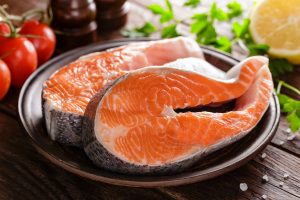
Research over the past several decades has revealed that a higher intake of several specific nutrients corresponds with less UV induced skin damage, less photoaging, and less incidence of skin cancers. These nutrients, which include omega-3 fatty acids, carotenoids, ascorbate, a tocopherol, and polyphenols, can help decrease photoaging and protect the health of the skin upon UV exposure, a process called endogenous photoprotection. Below we discuss several nutrients from our diet can help protect the skin from UV induced damage while we reap the amazing health benefits of regular sunshine exposure.
Probiotics
Skin health is maintained by a balanced, diverse microbiome, which is affected by nutrition, pH level, hygiene, exposure to toxins, barrier strength, stress levels, sunlight exposure, as well as overall health. UV exposure (and vitamin D itself) can have a healthy, regulatory effect on the microbiome of the skin as well as the gut, with UVB light having a beneficial impact on the diversity and abundance of the bacteria species of the gut microbiome, and UVB as well as UVA benefitting the skin microbiome.
Topical and oral probiotics as well as the ingestion of prebiotics can also be helpful in protecting against UV damage and photoaging. Several specific probiotic strains have been shown to have significant antioxidant, antiwrinkle, and antiaging effects, with a protective effect against UV induced damage. According to Rai et al., 2022, “Many organisms, such as microbes, plants, and animals, have evolved photoprotective mechanisms to guard their cells, DNA, and molecules against potentially harmful radiation. With the ‘nature as an inspiration’ approach, these microbial metabolites can be manipulated as future sunscreens that provide balanced protection and are economical and safe to use.”
Omega-3 Fatty Acids
An increased intake of omega-3 fatty acids, and a decreased intake of omega-6 fatty acids, have been associated with better responses to UV exposure within the skin. Eicosanoids are pro-inflammatory molecules produced from omega-6 fatty acids, which act as important chemicals in the immune system. However, when too many of them are produced, they can suppress the immune system and increase inflammation. Unfortunately, a majority of the population consumes too many omega-6s and too few omega-3s, which leads to an abundance of omega-6s in the cell membrane, increased levels of inflammation, and a poorer immune response – all of which can lead to increased damage to skin cells and improper recovery after excessive UV exposure.
Studies suggest that omega-3 fatty acids may help reduce the risk of skin cancer through their role in maintaining a healthy cell-mediated immune response (CMI), which aids in the destruction of tumor cells therefore inhibiting the growth and spread of cancerous cells. A randomized controlled study by Pilkington et al. looked to see if omega-3 supplementation reduced photoimmunosuppression of skin cells. The study involved 79 participants, half of whom were supplemented with 5 grams of an omega-3 supplement (70% EPA, 10% DHA), and half of whom took a placebo, for a 3 month period. Compared to the control group, those in the omega-3 supplemented group experienced 50% less photoimmunosuppression when exposed to low doses of UVR (equivalent to approximately 8 and 15 minutes of mid-day summer sun exposure in Manchester, UK), indicating a protective effect from omega-3 supplementation.
Another study by Latreille et al. looked at dietary intake of omega-3 fatty acids and the amount of facial skin photoaging among 2919 participants between the ages of 45 and 60 years, and found that severe photoaging was inversely associated with omega-3 intake (specifically ALA intake in men and EPA intake in women).
Dietary Carotenoids (β-carotene and Lycopene)
Tomatoes are one of the richest sources of lycopene, a beta-carotene also found in other red fruits and vegetables. Previous studies in humans have specifically shown that continued consumption of tomato paste can reduce the risk of sunburns, and that carotenoids, especially lycopene, are protective of skin health and can help prevent UV damage to the skin. A study by Cooperstone et al. looked into the protective effects of prolonged tomato consumption against UV induced sunburns in mice. Their study found that daily tomato consumption could reduce the risk of keratinocyte carcinomas, or UV induced skin tumors, by 50%.
Astaxanthin
Astaxanthin is another carotenoid found in different types of algae, fish, and crustaceans, which has anti-tumor, anticancer, anti-diabetic, anti-atherosclerotic, and anti-inflammatory properties. A study by Lyons and O’Brien looked at the protective effects of astaxanthin, from both algal extract as well as a synthetic astaxanthin, on human skin cell cultures with UVA induced DNA damage. They found less DNA damage among those cells that had been treated with astaxanthin, with a protective effect observed for all concentrations of the synthetic astaxanthin as well as for the highest concentration of algal extract.
Another study on mice by Komatsu et al. found that the ingestion of green microalga (Haematococcus pluvialis) significantly suppressed photoaging after chronic exposure to UVA, specifically leading to decreased wrinkle formation and transepidermal water loss. They conclude that “Our data supports the hypothesis that the accumulation of dietary astaxanthin in the skin could be sufficient to play a preventive role against UV damage.”
Polyphenols
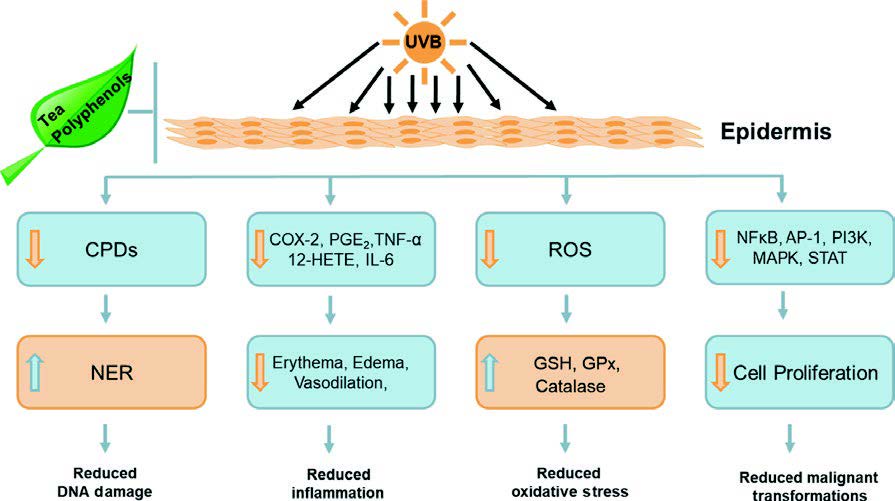
Polyphenols (another specific type of antioxidant) have been shown to benefit the health of the skin and protect it against UV damage through their roles in DNA repair, inflammation, oxidative stress, signaling pathways, and epigenetics. Sharma et al. provides an excellent review of in vitro, in vivo, and human studies that demonstrate these protective effects. As illustrated in the diagram below, polyphenols from tea can help protect the skin from UV damage by reducing DNA damage, inflammation, oxidative stress, and resulting cancers.
Flavanoids are a specific type of polyphenol found in fruits, tea, cocoa, and red wine. Heinrich et al. investigated the effects of repetitive flavonoid intake on skin sensitivity towards UV exposure, skin structure and skin texture by studying the difference between two groups of women who consumed either a cocoa drink with high flavanol content or one with low flavanol content for 12 weeks. The women drinking the high flavanol cocoa drink experienced a 25% decrease in UV induced sunburns after 12 weeks, while the women drinking the low flavanol cocoa drink experienced no changes. The authors concluded that “…the regular consumption of a beverage rich in flavanols can confer substantial photoprotection as well as help maintain skin health by improving skin structure and function. The photoprotection offered by cocoa flavanols is within the range of that reported for dietary carotenoids, such as β-carotene or lycopene.”
Nicotinamide (Vitamin B3)
Nicotinamide (vitamin B3) has been shown to reduce the incidence of non-melanoma skin cancers among high-risk individuals. A review article by Diona L Damian describes the effects of nicotinamide against UV induced damage and resulting skin cancers, highlighting its ability to enhance DNA repair, reduce UV radiation-induced suppression of skin immune responses, modulate inflammatory cytokine production and skin barrier function, and restore cellular energy levels after UV exposure. The author states that “Pharmacological doses of nicotinamide have been shown to reduce actinic keratoses and nonmelanoma skin cancer incidence in high-risk individuals, making this a nontoxic and accessible option for skin cancer chemoprevention in this population.”
Other Important Nutrients to Protect Skin Health
Don’t forget that there are many nutrients that work along-side each other to benefit our health. Other nutrients that are important for the health of our skin include Vitamin C, which plays an important role in collagen production and acts as an antioxidant to protect against sun damage, Vitamin E, which like vitamin C, functions as an antioxidant in the skin to protect against sun damage, and other B vitamins.
Summary of Practical “Sun Smart” Tips
A balanced sunlight strategy may include:
- Daily Light Hygiene
- Get bright outdoor light early in the day
- Spend time outdoors regularly
- Reduce artificial light exposure at night
- Dim screens and indoor lighting in the evening
- Sleep in a dark environment
For Intelligent Sun Exposure:
- Start slowly each season
- Avoid burning entirely
- Increase exposure progressively
- Prefer shorter, regular exposures
- Expose larger skin areas when appropriate
- Monitor skin response carefully
Respect Individual Differences! Sun tolerance varies based on:
- Skin type
- Geography and UV index
- Altitude
- Season
- Age
- Metabolic health
- Medication use
- Previous sun adaptation
There is no universal “perfect” exposure time for everyone! Get to know how your skin reacts to sun exposure – be mindful and cover up before allowing your skin to burn.
Reframing the Conversation Around Sunlight
The growing body of research on circadian biology, photobiomodulation, nitric oxide, vitamin D, and light hygiene suggests that sunlight should no longer be viewed through a simplistic “good vs bad” framework. The real goal is balance.
Sunlight, used intelligently, may be one of the most powerful and accessible tools available for supporting human health.
SmartTan.com news articles regularly report medical and scientific information to keep you abreast of current events related to UV light. This information is not intended to be used by any party to make unwarranted health claims to promote sunbed usage. Indoor tanning businesses are obligated to communicate a fair and balanced message to all clients about your products and services including the potential risks associated with indoor tanning. Contact your Smart Tan representative to find out more about what you can and can’t say in your tanning salon business.
© 2026 International Smart Tan Network. All rights reserved.


