


Home Field Advantage Geofencing is your competitive edge for neighborhood marketing
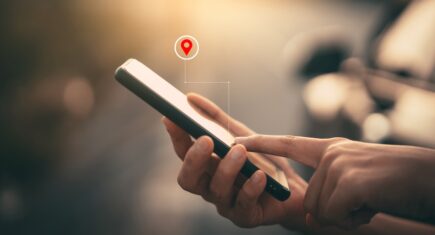
Today’s marketing options can reach customers anywhere and everywhere, but your best customer still usually lives, works, or works out within about a ten-minute drive of your front door. Better equipment and service can draw people across town, but proximity remains the greatest competitive advantage. For decades, that reality shaped how salons marketed—direct mail to nearby ZIP codes, a banner near the busy intersection, a coupon in the community mailer.
Geofencing takes that same instinct and makes it surgical. Instead of blanketing a ZIP code and hoping the right people notice, you draw an invisible boundary around a specific location on a map—your salon, a competitor down the road, the CrossFit gym around the corner, the bridal shop, the college dorm complex—and you deliver ads to the phones of people who physically enter that boundary. It’s proximity marketing with a scalpel, and for an industry built on location and impulse, it may be the most naturally aligned advertising tool to come along in years.
What Geofencing Actually Is
Strip away the jargon and geofencing is simple. A “geofence” is a virtual perimeter around a real-world place, defined by GPS coordinates. When someone’s smartphone crosses that line—and they’ve got location services on, which the vast majority of people do—that phone becomes eligible to see your ad. The ad might show up inside a weather app, a game, a news site, or a social feed. The person doesn’t know they’ve been “fenced.” They just see an ad for your salon at a moment when they happen to be standing somewhere relevant.
The precision is the point. A traditional radius-targeted ad might reach everyone within three miles. A geofence can be tight enough to cover a single gym parking lot, a specific apartment complex, or the sidewalk outside a competitor’s door. And because the trigger is physical presence rather than a guessed interest, you’re reaching people based on where they actually go—which, as any operator knows, tells you far more than a demographic profile ever could.
There are two flavors worth understanding. Real-time geofencing targets people while they’re inside the fence right now—someone walking into the gym gets your ad in the next few minutes. Geofence retargeting (sometimes called geo-conquesting when aimed at competitors) captures the device IDs of people who entered a location and continues serving them ads for days or weeks afterward, even after they’ve gone home. That second version is where a lot of the strategic magic lives for tanning salons, and we’ll get to why.
Click here to read the entire article in the latest issue of Smart Tan Magazine online.


