


The Emerging Science of Full-Spectrum Sunlight and Human Health

From GrassrootsHealth
The unique biological consequences of full spectrum sunshine, including UVB, UVA, Red, Near Infrared, Far Infrared, and Blue Light
Key Points
- There are several wavelengths of energy from sunshine that trigger specific actions within the body to influence our health; different wavelengths are able to penetrate the skin to different depths and have certain effects on the cells and tissues they reach
- UVB radiation stimulates the production of vitamin D, as well as serotonin and beta-endorphins, UVA and UVB promote the release of nitric oxide into the blood, and both have a positive effect on the diversity of the microbiome on the skin and in the gut
- Blue light has a strong regulatory effect on the circadian rhythm and the release of melatonin from the pineal gland, while red light, near-infrared radiation, and far-infrared radiation have anti-inflammatory and tissue healing effects; infrared radiation also stimulates the production of melatonin inside the mitochondria for a strong antioxidant effect
Watch the Recording: Sunlight as a Biological Signal for Health, A Balanced Approach
Sunlight plays a far greater role in human health than most people realize, extending beyond bone health from vitamin D production into circadian biology, immune regulation, eye health, metabolism, and healthy aging. In the special Sunshine Month presentation above, Dr. Alexander Wunsch shares a balanced scientific perspective on sunlight and human biology. Drawing from decades of research in photobiology and light medicine, Dr. Wunsch explains how sunlight acts not only as a source of vitamin D, but also as a powerful biological signal that influences circadian rhythms, autonomic function, mental health, mitochondrial activity, and recovery processes.
The presentation explores the complex relationship between ultraviolet light, visible light, infrared radiation, melatonin, and vitamin D, while emphasizing the importance of proper timing, intelligent dosing, and maintaining healthy light-dark rhythms.
Key topics discussed include:
- Why sunlight is both beneficial and biologically stressful
- The difference between heliotherapy and helioprevention
- How light regulates circadian rhythms and autonomic balance
- The roles of UVB, UVA, visible light, and infrared light
- Forest light environments and filtered sunlight exposure
- Melatonin, darkness, and nighttime recovery
- Morning sunlight, red light signals, and chronobiology
- Sunglasses, eye protection, and retinal health
- Near-infrared light and mitochondrial function
- Red light therapy vs natural sunlight
- Safe sun exposure practices and avoiding erythema
What Is Sunlight?
 The energy given off from the sun (aka the solar spectrum) consists of different wavelengths between 300 nm and well over 1 mm. While not all of this radiation is able to penetrate the earth’s atmosphere to reach the earth’s surface, those that do have a wavelength between 100 nm and 1mm, and include ultraviolet radiation (100-400 nm), visible light (400-700 nm), and infrared light (700 nm to over 1 mm).
Just as some of this spectrum is able to make it through the atmosphere, different wavelengths are also able to penetrate the skin to different depths of the body’s tissues to have certain effects on the cells within those tissues. This energy from the sun can trigger multiple actions within the body that influence our health, several of which are described by Dr. Wunsch in the recorded presentation above, in the video snippets below with Dr. Michael Holick, and as illustrated in the graphics and detail below.
What Happens in the Body when it is Exposed to Sunlight?
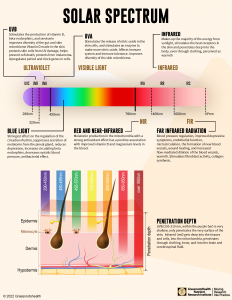
As shown in this illustration, those at the lower wavelengths (such as UVB) only penetrate the very surface of the skin, while those at higher wavelengths (such as visible light) are able to penetrate deeper. Think of how you are able to see the light from a flashlight on the back of your hand when held against the skin on the palm of the hand – you can visually see the energy traveling through the skin, muscles, blood vessels and tissues of the hand. Infrared radiation can even get into the cells and mitochondria, and can get through clothing and bone!
Sunlight Is More Than Vitamin D: A Full-Spectrum Biological Signal
One of the most important themes emphasized by Dr. Wunsch during the webinar above was that sunlight should not be viewed solely as a source of vitamin D production. While UVB exposure and vitamin D synthesis remain critically important, sunlight also delivers a broad spectrum of biological signals that influence circadian rhythms, mitochondrial function, hormonal balance, metabolism, mood, immune regulation, and cellular communication. In fact, UVB radiation, the wavelength responsible for vitamin D production, represents only a very small fraction of the total solar energy reaching the Earth’s surface. The majority of sunlight consists of visible and infrared wavelengths, each interacting with the body in unique and interconnected ways. This broader perspective helps explain why the health effects of sunlight extend well beyond vitamin D alone, and that many of the beneficial effects associated with outdoor exposure may involve the combined influence of ultraviolet, visible, and infrared wavelengths.
Rather than acting through a single mechanism, sunlight appears to influence human physiology through multiple coordinated pathways simultaneously. Morning light, midday sunlight, sunset light, seasonal shifts in daylight, and nighttime darkness all serve as important biological signals that help regulate sleep, mood, activity, hormone production, metabolism, repair processes, and behavior.
Natural sunlight exposure changes continuously throughout the day. Morning sunlight contains a different spectral composition than midday sunlight or sunset light. These changing light patterns help synchronize the body’s circadian rhythms and communicate important environmental information to the brain and body. Unfortunately, modern indoor lifestyles may significantly disrupt these ancient biological signaling systems. Spending most of the day indoors under artificial lighting, especially while disconnected from natural daylight and nighttime darkness, may contribute to circadian disruption, altered sleep quality, mood changes, metabolic dysfunction, and reduced resilience.
Sunlight, Circadian Rhythms, and Biological Timing
One topic presented by Dr. Wunsch was the role of sunlight in regulating circadian biology. Humans evolved with a strong biological association between bright blue-rich daylight and daytime activity, while darkness and the absence of blue light became associated with nighttime repair and regeneration. Exposure to natural outdoor light during the day helps regulate circadian timing systems that influence:
- Sleep-wake cycles
- Melatonin rhythms
- Hormone regulation
- Mood and cognition
- Metabolism and energy balance
- Immune system signaling
At the same time, excessive artificial light exposure at night, particularly blue-rich light from screens and indoor lighting, may interfere with these natural rhythms. This growing field of circadian biology reinforces the importance not only of sensible sun exposure during the day, but also of preserving adequate darkness at night.
Sunlight’s Two Biological Pathways: The Skin & The Eyes

One of the most important concepts highlighted in infographic above, provided by Dr. Wunsch, is that sunlight affects the body through two complementary biological pathways:
1. The Skin (Dermal) Pathway
Sunlight exposure to the skin triggers multiple physiological responses, including:
- Vitamin D synthesis
- Nitric oxide release for vascular support
- Photobiomodulation effects from red and near-infrared light
- Adaptive pigmentation and melanin production
- Hormetic cellular signaling and stress adaptation
This pathway is influenced by:
- UV intensity
- Skin type
- Latitude and season
- Amount of exposed skin
- Time outdoors
- Degree of skin adaptation
2. The Ocular / Circadian Pathway
The eyes are also highly sensitive biological light sensors. Daylight entering the eyes helps:
- Synchronize the circadian clock
- Regulate melatonin and cortisol rhythms
- Support serotonin and dopamine signaling
- Improve alertness, cognition, and mood
- Enhance sleep quality and autonomic balance
This pathway explains why modern indoor living with insufficient daytime light and excessive nighttime artificial light may contribute to circadian disruption, poor sleep, metabolic dysfunction, and mental health disorders.
Avoiding the Sun: Problem with Modern Indoor Living
For most of human history, people lived outdoors under natural light-dark cycles. Today, many individuals spend most of their day indoors under dim artificial lighting, receive inadequate morning daylight exposure, use bright screens late into the evening, maintain irregular sleep schedules, and may avoid outdoor light almost entirely. Together, these modern habits contribute to what some researchers now describe as poor light hygiene. Emerging evidence suggests that:
- Bright daytime light exposure is associated with improved mental health
- Dark nighttime environments support restorative sleep and melatonin production
- Circadian disruption may increase risk for depression, anxiety, metabolic disease, and impaired immune regulation
Below are many additional ways that sunlight can benefit overall health.
 What happens in your body when it is exposed to sunlight?
Watch this snippet of a video interview with Dr. Michael Holick, as he describes some of the reactions that happen within the body when it is exposed to sunlight.
 Supplements do not replace sunlight
Sunlight has more benefits than those provided by UVB and vitamin D. Learn about the different rays found in sunlight and their unique benefits to your health.
 Can the benefits of sunshine exposure be replaced by a pill?
Watch this snippet of a video interview with Dr. Michael Holick, as he describes the multiple benefits of sunshine exposure, and why the health benefits of sunshine cannot be replaced.
How Each Wavelength from Sunlight Affects Our Health
Ultraviolet-B Radiation (UVB) – Vitamin D, Serotonin, and Beta-endorphins
UVB (295-319 mn) is at the bottom end of the sunlight spectrum is able to reach the surface of the earth, and therefore our skin, only at specific times and locations. UVB light leads to vitamin D synthesis and can be used as a main source of vitamin D when it is available in plentiful amounts. While UVB is not able to penetrate beyond the very surface of the skin, the vitamin D that is made in the skin circulates throughout the body and tissues, bringing with it a wide range of health benefits.
The vitamin D produced in the skin can also help protect the skin cells from DNA damage, facilitate DNA repair directly upon any UV damage, help prevent cell death, and protect against melanoma. In fact, keratinocytes, which make up over 90% of the outermost layer of skin, cannot rely on vitamin D3 from supplements and must synthesize their own supply of vitamin D directly from sun exposure, or by topical application.
Besides vitamin D, UVB radiation also promotes the production of serotonin and beta-endorphins, chemicals that help with mood enhancement and relaxation, relieve pain, and boost immunity. Serotonin is a neurotransmitter involved not only in mood, but also in cognition, regulation of feeding behavior, anxiety, aggression, pain, sexual activity, and sleep. Recent research has identified an “endogenous opioid-mediated addiction-like pathway,” or a built-in feedback loop between vitamin D levels and sun seeking behavior, triggered by the UV-induced release of beta-endorphins. The suggested benefit is to provide a “reward” for UV-induced vitamin D synthesis when vitamin D levels are low, during which time a greater amount of beta-endorphins are released upon exposure to UVB. As vitamin D levels rise, the sun-seeking behavior and resulting opioid response become repressed as less vitamin D is needed.
“Avoiding the sun and using dietary sources and/or vitamin D supplements to meet vitamin D requirements may seem an attractive solution. However, exposure to UV radiation may have benefits independently of vitamin D, particularly for the immune system.” Dr. Rachel Neale
Ultraviolet-A Radiation (UVA and UVB) – Nitric Oxide
UVA (320-399 nm) exists at a wavelength between UVB and visible light, and is able to reach the deeper levels of the skin but not much further. Both UVA and UVB lead to the release of nitric oxide into the bloodstream which in turn benefits the cardiovascular and metabolic systems, and may offer other immunological benefits beyond those offered by nitric oxide.
Nitric oxide is beneficial for heart health by acting to increase blood flow and lower blood pressure. Additionally, nitric oxide plays a key role in immunity, cellular function, neurotransmission, and it has antimicrobial and anticancer effects.
“…liver function, obesity, type 2 diabetes and metabolic syndrome may all be modulated via sunlight exposure independently of vitamin D synthesis.” Hazell et al. (2023)
Ultraviolet Radiation (UVA and UVB) – Balancing the Microbiome of the Skin & Gut
Your gastrointestinal tract and the surface of the skin are home to trillions of microbes (bacteria, viruses, and yeast), called your “microbiome,” which act as their own organ and are crucial to your overall health. Skin health in particular is maintained by a balanced, diverse microbiome, which is in turn affected by nutrition, pH level, hygiene, exposure to toxins, barrier strength, stress levels, sunlight exposure, and overall health. Interestingly, the microbiome of both the skin and the gut contributes to skin health.
UV exposure (and vitamin D itself) can have a healthy, regulatory effect on the microbiome of the skin and the gut, with UVB light having a beneficial impact on the diversity and abundance of the bacteria species of the gut microbiome, and UVB as well as UVA benefitting the skin microbiome. Studies have even shown that several molecules that help protect our skin from UV damage can be produced by the microbiome on our skin upon UV exposure, acting as a sort of natural sunscreen. A new study by Harel et al. (2023) examined the skin microbiome of lifeguards who were regularly exposed to longer periods of summer sun. They found that, after the summer season, there was an increased abundance of UV-resistant bacteria, which helped to protect the skin cells from damage through their production of anti-oxidative molecules.
While there are several negative effects of chronic, prolonged UV radiation (the kind that that leads to acute sunburn), the positive effects of UV radiation range from maintaining the diversity of the microbiome, to the stimulation of both anti-inflammatory and immunosuppressive pathways that play a helpful role in many diseases, of the skin as well as systemic diseases.
Blue Light – Regulation of Circadian Rhythm, and Melatonin
Blue light (460 nm) is another form of energy from sunlight that has potential health benefits. Studies have shown that blue light has the strongest effect on the suppression of melatonin secretion from the pineal gland upon exposure to the eyes, which likely contributes to the regulation of the circadian rhythm (also known as your internal clock). Daytime sunlight exposure helps guide your circadian rhythm by increasing melatonin levels at night which promotes sleep and allows your body enough time to rejuvenate. A healthy, regular circadian rhythm also promotes healthy mood and improved cognition. Disruptions to circadian rhythm have been shown to increase the risk of cancer, heart disease, and metabolic conditions.
Research has found that, compared to white light therapy, blue light is more effective for resetting circadian rhythms, suppressing nighttime melatonin, and enhancing performance. Blue light may also play a role in the improvement of mood and depression, both seasonal and non-seasonal. Other physiological actions of blue light suggested by studies include an increase in circulating beta endorphins, decreased systolic blood pressure due to nitric oxide mechanisms in the skin, an anti-bacterial effect, and a potential bio-modulating effect within the cells.
Beneficial Effects of Red Light and Near-Infrared Radiation
Photobiomodulation is a term used to describe the physiological effects from irradiation by red or near-infrared wavelengths. Red and near-infrared wavelengths have the ability to penetrate inside of our body’s tissues and cells, and can even penetrate through thin clothing. Studies have shown such benefits include improved tissue function, wound healing, anti-inflammatory effects, and improved energy metabolism from red and near-infrared wavelengths. Hazell et al. (2023) found that “low levels of infra-red radiation within sunlight play a role in mitigating UV damage through DNA damage repair during the morning and evening when UV levels are low but infra-red and visible light remain high.” Red light specifically (650-950 nm) may even have a positive association with improved vitamin D and magnesium levels in the blood.
Near infrared (over 950 nm) may penetrate as deep as 8 cm and can penetrate bone, enter the cerebrospinal fluid and the brain. The majority of energy from the sunshine is from infrared radiation; we cannot see it, but it is perceived as warmth as it stimulates the heat receptors in skin.
New research by Jeffery et al. (2025) demonstrated that near-infrared wavelengths naturally present in sunlight can penetrate deeply through the human body and may improve visual function. After just 15 minutes of exposure to 850 nm near-infrared light directed at the back, participants showed measurable improvements in visual function 24 hours later, including improvements even when the eyes themselves were shielded from the light. The authors suggest these longer wavelengths may help support mitochondrial function, ATP production, cellular signaling, and healthy aging processes throughout the body. They also noted that modern indoor LED lighting lacks many of the longer infrared wavelengths naturally present in sunlight, raising important questions about how reduced exposure to full-spectrum natural light may impact human health.
Conditions that may benefit from photobiomodulation include allergies, hypothyroidism, depression, dementia, cancer, diabetes related symptoms, exercise performance and recovery, pain, and cardiovascular diseases. One of the proposed mechanisms is with the involvement of the mitochondria, since changes in ATP levels have been an observed outcome of red and near-infrared radiation.
Near-Infrared Radiation – Intra-cellular Melatonin Production
Research by Zimmerman, S. and Reiter R. suggests that melatonin (a master antioxidant) exists in two main forms within the body – circulatory melatonin, which is suppressed during the day upon exposure to blue light and has its major effect on sleep and the circadian rhythm, and sub-cellular melatonin, which is produced and used locally by the mitochondria within our cells. Near-infrared radiation stimulates melatonin production in the mitochondria, which helps protect the skin cells from UV damage, increases collagen production, improves energy metabolism and tissue function, and has wound healing and anti-inflammatory effects.
Far-Infrared Radiation Effects
Far infrared radiation (FIR) is at the far end of the solar spectrum of energy that reaches the earth’s surface, opposite of UVB, with the longest wavelength. Studies suggest that the cardiovascular system especially may benefit from FIR. Reported effects of FIR include blood pressure regulation, improved depressive symptoms, endothelial function, microcirculation, the formation of new blood vessels, wound healing, and increased flow-mediated dilation of the blood vessels, although some of these effects may be attributed solely to the thermal effects of FIR.
Key Takeaway: Interacting with Sunshine Intelligently
It is becoming clear that many individuals may be experiencing a form of “light deficiency” that extends beyond vitamin D deficiency alone. The health implications may involve multiple interconnected systems including circadian regulation, mood, sleep quality, metabolism, hormonal signaling, mitochondrial function, and overall resilience.
The body possesses multiple adaptive systems, including pigmentation responses, capillary reflexes, behavioral avoidance, lens aging, and melatonin regulation, that help humans interact safely with varying light environments. This balanced perspective aligns with the growing body of research suggesting that avoiding sunburn remains critically important, while complete avoidance of sunlight may also carry unintended health consequences.
Make Sure You Are Getting Enough of Both Sunshine & Vitamin D
It is important to incorporate safe, sensible sun exposure into a regular routine, just as it is important to make sure you are getting enough vitamin D. Because the sun produces many health-benefiting molecules in addition to vitamin D, sunshine exposure cannot be replaced with taking a supplement.
It is also important not to stop supplementing with vitamin D during the summer. Most people do not make enough vitamin D from sunshine alone, due to their lifestyle and other factors, and therefore must rely on supplementation to maintain optimal vitamin D levels of 40-60 ng/ml (100-150 nmol/L).
SmartTan.com news articles regularly report medical and scientific information to keep you abreast of current events related to UV light. This information is not intended to be used by any party to make unwarranted health claims to promote sunbed usage. Indoor tanning businesses are obligated to communicate a fair and balanced message to all clients about your products and services including the potential risks associated with indoor tanning. Contact your Smart Tan representative to find out more about what you can and can’t say in your tanning salon business.
© 2026 International Smart Tan Network. All rights reserved.


